

Artificial Intelligence (AI) has come a long way from being a tool for specific tasks like language translation or image recognition. Today, AI systems are evolving to become more autonomous, capable of learning, adapting, and making decisions without constant human intervention. A concept at the forefront of this evolution is the Agentic Framework in AI. But what does this framework entail, and why should you care? Let’s unpack it in simple terms.
What is the Agentic Framework?
The Agentic Framework is a design philosophy that frames AI systems as agents. These agents operate with a higher degree of autonomy and intelligence than traditional AI systems. Here are the key characteristics:
Goal-driven: The agent works toward achieving specific objectives.
Environment-aware: It perceives and interacts with its surroundings
Autonomous: It makes decisions independently, without relying on constant human input
Learning-oriented: It improves over time by learning from its interactions and experiences.
In short, an agentic AI isn’t just a passive tool; it’s an active, decision-making entity that collaborates with humans or other systems to achieve goals.
Why is the Agentic Framework Important?
Here’s why this framework is shaping the future of AI:
Dynamic Decision-Making: Unlike traditional AI systems that follow static rules, agentic systems adapt and respond to real-time changes.
Scalability: Agentic AI can handle complex environments like robotics, autonomous vehicles, or large-scale simulations, where adaptability is crucial.
Human-like Interaction: These agents can emulate reasoning and decision-making patterns akin to humans, making them ideal for applications like customer service or personal assistants.
Reduced Supervision: Agentic systems free up human resources by requiring minimal oversight, allowing humans to focus on strategic tasks.
Breaking Down an Agentic AI System
An agentic AI system typically consists of the following core components
1. Agent Core (LLM):
At the heart of the system, the Agent Core acts as the decision-making engine.It employs large language models (LLMs) like GPT-4 to handle high-level reasoning, dynamic task management, and goal updates
The core includes follwing components.
Decision-Making Engine for analyzing inputs and generating responses.
Goal Management System to adapt objectives based on task progress.
An Integration Bus for seamless data flow between modules.
2. Memory Modules:
Memory ensures context-awareness and task relevance
There are two types of memory.Short-term Memory (STM):Temporary storage for immediate tasks, optimized for quick access.Long-term Memory (LTM): Persistent storage using vector databases (e.g., Pinecone, Weaviate) to recall historical interactions, with retrieval based on semantic similarity.
3. Tools:
These are specialized capabilities for executing tasks, such as APIs or executable workflows.Frameworks like LangChain provide dynamic interaction and middleware support for secure and accurate data exchange.
4. Planning Module:
Planning modules handles complex problem through task decomposition and prioritization.Task Management System generates and adjusts task priorities in real-time, ensuring smooth progress toward goals.
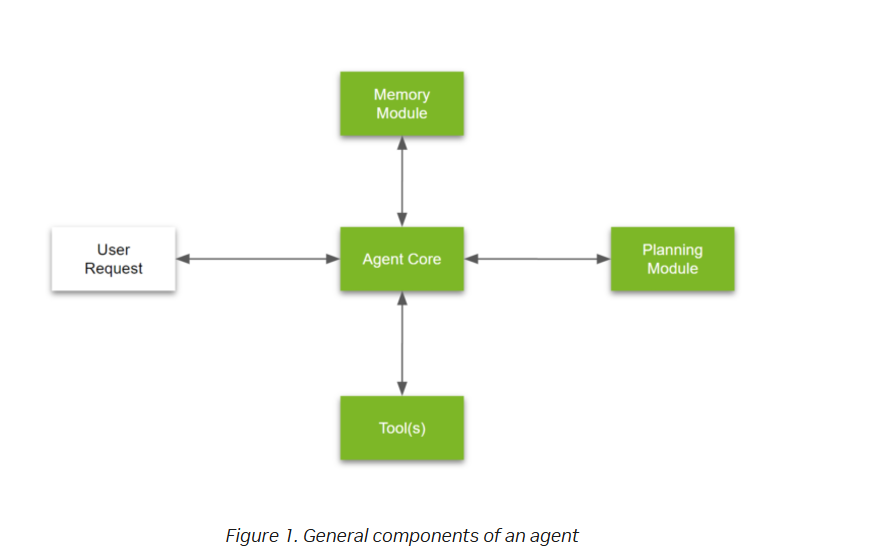
The image above (source) illustrates the architecture of a typical end-to-end agent pipeline.
Real-World Applications of the Agentic Framework
1. Healthcare: AI systems that autonomously create personalized treatment plans based on patient data and outcomes.
2. Autonomous Vehicles: Cars that navigate traffic, avoid obstacles, and adapt to unforeseen events like roadblocks.
3. Virtual Assistants: AI tutors that customize learning experiences based on the pace and preferences of individual students.
Challenges in Implementing Agentic AI
1. Ethical Concerns: Ensuring that these systems act in alignment with human values to avoid unintended consequences.
2. Complexity: Building and integrating multi-component systems is no small feat.
3. Trust: Users need assurance that AI’s decisions are explainable, reliable, and safe.
4. Regulatory Oversight:Sensitive applications, like healthcare or law enforcement, require strict compliance with regulations.
The Future of Agentic AI
The Agentic Framework is reshaping AI systems to be more like collaborators than tools. It offers a glimpse into a future where AI enhances daily life and tackles complex global challenges. However, this progress brings responsibilities—ensuring ethical design, building trust, and maintaining proper oversight are crucial for success.
What excites you the most about the Agentic Framework? Do you look forward to a future with smarter, more autonomous AI? Let’s discuss in comments.
Stay tuned for more beginner-friendly insights into AI and emerging technologies. Don’t forget to subscribe for updates!